doorman
| Field | Value |
|---|---|
| Purpose | Secrets management — discovers doorman-* plugins on PATH and provides a unified interface for retrieving secrets from any backend |
| Repo | AmadlaOrg/doorman |
Commands
| Command | Description |
|---|---|
doorman get <key> --from <plugin> |
Retrieve a secret by key via the named plugin (runs doorman-<plugin> get <key>, streams its output verbatim) |
doorman plugins |
List discovered doorman-* plugins from PATH with name, engine, version, description (-o table\|json\|yaml, --hery envelope) |
Per-command sequence diagrams: doorman Commands.
Dependencies
| Library | Purpose |
|---|---|
| spf13/cobra | CLI command framework |
| olekukonko/tablewriter | Table output for plugins |
| gopkg.in/yaml.v3 | YAML output format |
| stretchr/testify | Test assertions |
doorman deliberately has no Amadla library dependencies (no replace directives) — plugin discovery and subprocess delegation are implemented directly.
Entity Types
| Entity | What doorman Does |
|---|---|
| Secret | Retrieves secret values from the backend that owns them, via plugins |
Pipeline Position
doorman sits between hery and raise in the pipeline diagram, but today it operates out-of-band: any tool (or shell script) that needs a secret calls doorman get. In-stream resolution of secret references in entity data is planned (see below).
hery → [doorman] → raise → lay → enjoin → weaver → waiter → judge
         │
    ┌────┴────────┐
    │ Doorman     │
    │ Plugins     │
    │ (vault,     │
    │  aws, ...)  │
    └─────────────┘
Architecture
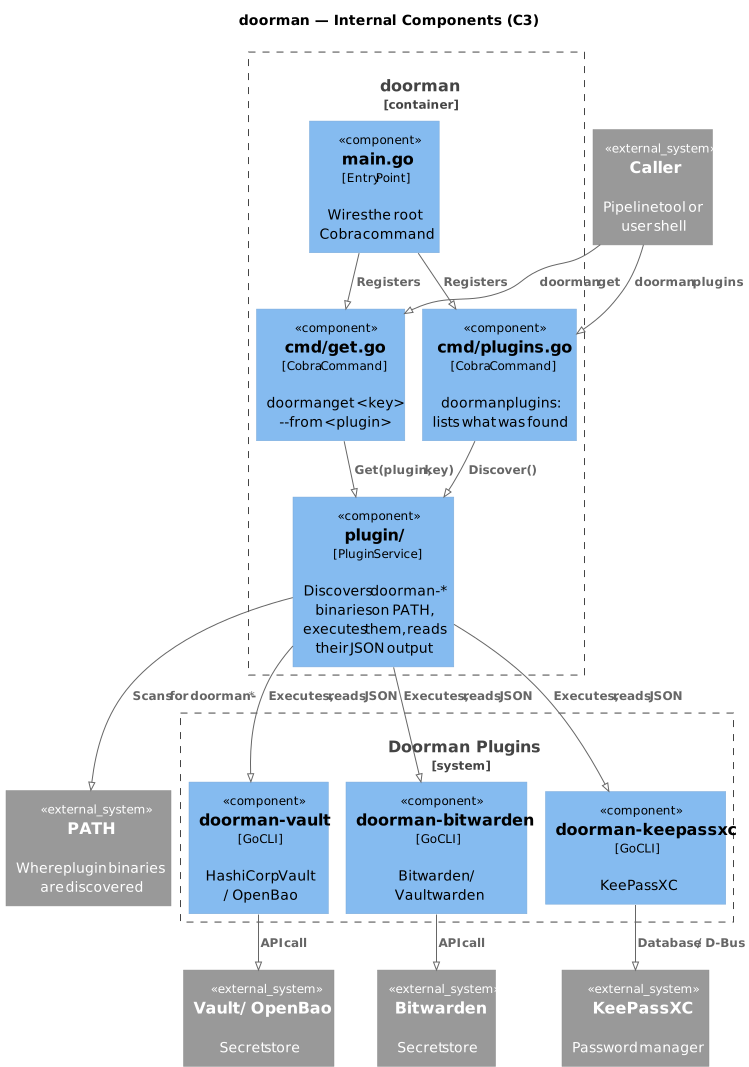
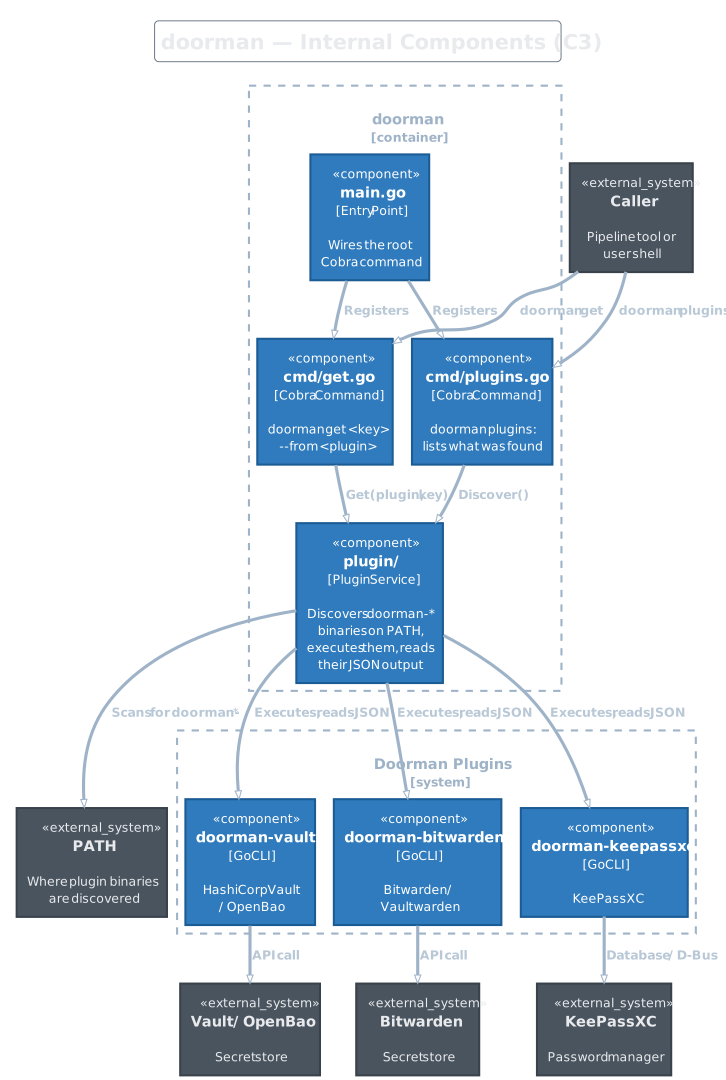
Core Flow
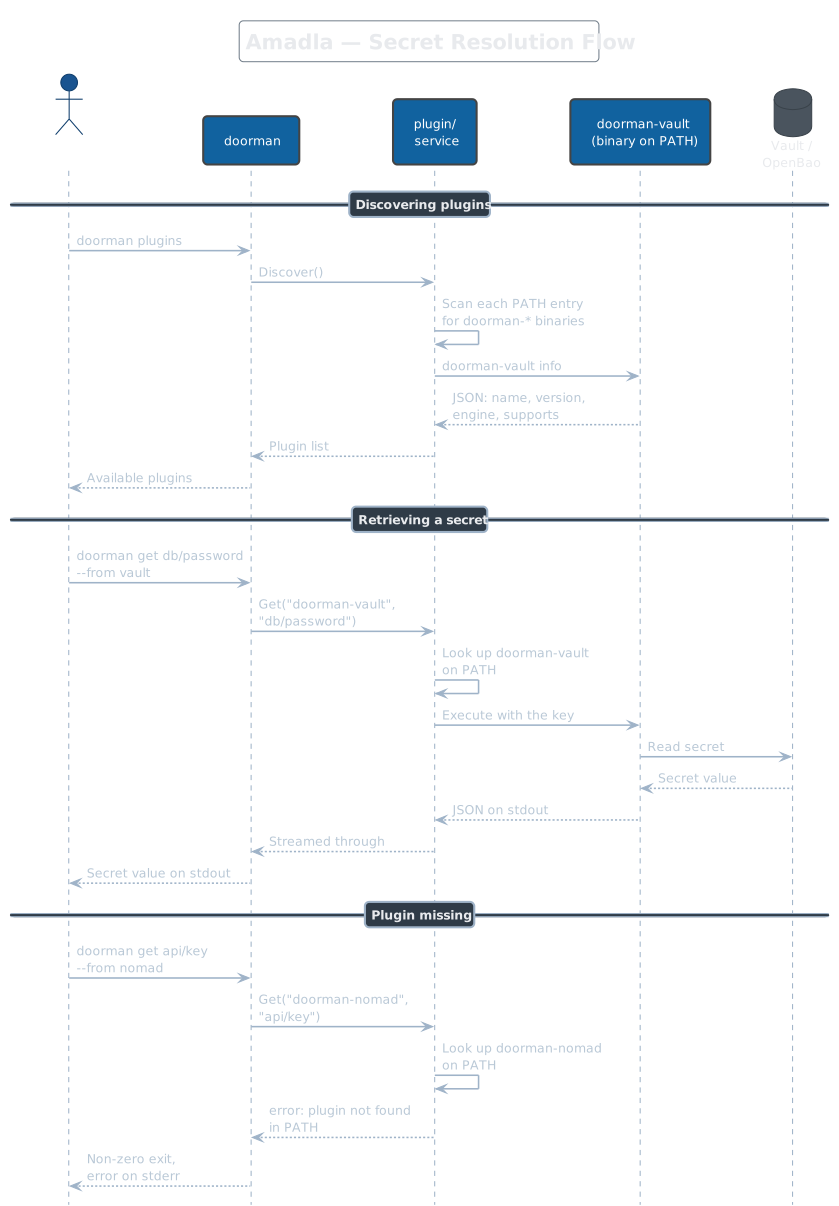
doorman get <key> --from <plugin>  →  doorman-<plugin> get <key>  →  secret value on stdout
doorman plugins                    →  PATH scan for doorman-*     →  <plugin> info -o json per plugin
doorman is a wrapper tool, not a daemon. It discovers doorman-* executables on PATH (manual directory scan with exec-bit check and dedup) and delegates to them as subprocesses. get pipes the plugin's stdout and stderr straight through, so the secret value reaches the caller exactly as the plugin emits it. plugins queries each discovered plugin with info -o json and accepts both HERY-envelope (_type/_body) and flat JSON responses.
Package Structure
main.go            # CLI entry (Cobra root command, registers get + plugins)
cmd/
├── get.go         # get command (--from required)
└── plugins.go     # plugins command (-o table|json|yaml, --hery)
plugin/
├── plugin.go      # Service: Discover (PATH scan), GetInfo, Get (subprocess exec)
└── plugin_test.go # Plugin service tests
Planned (design direction — not yet built)
The longer-term design has doorman resolving secret references inside entity streams: entity data flows in on stdin, doorman finds Secret references, routes each to the plugin that supports that backend (using the supports list from plugin info), and emits the entities with secrets injected — a resolve-style command matching the pipeline position above.
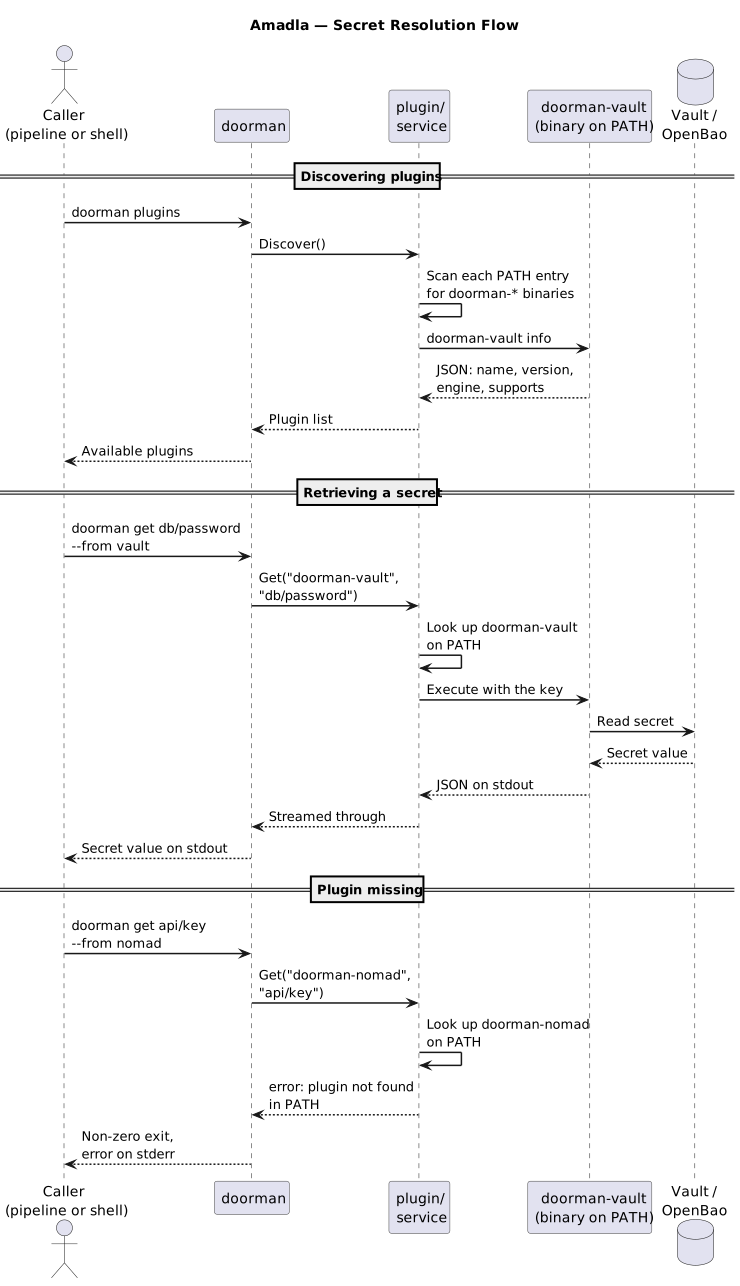
Entity with secret refs → doorman → doorman-* plugin (via stdin/stdout) → Secret entity (universal format) → stdout
Current Gaps
- No
resolve-style command yet — secret references in entity streams are not resolved; doorman is called per-secret --fromis always required onget— no auto-detection of which plugin owns a key (pluginsupportsmetadata is parsed but unused for routing)getstreams the raw plugin output with no--heryenvelope or format flag (onlypluginshas those)- No caching — every
getand everypluginsinvocation re-executes plugins - Tests cover the
pluginpackage only;cmd/has none
Key Files
| Path | Purpose |
|---|---|
main.go |
CLI entry point (Cobra) |
cmd/get.go |
get command |
cmd/plugins.go |
plugins command and output rendering |
plugin/plugin.go |
Plugin discovery, info querying, subprocess execution |
go.mod |
Dependencies |