hery
| Field | Value |
|---|---|
| Purpose | HERY (Hierarchical Entity Relational YAML) data storage with schema validation, Git versioning, and SQLite caching |
| Repo | AmadlaOrg/hery |
Commands
| Command | Description |
|---|---|
hery entity get |
Retrieve a specific entity |
hery entity init |
Scaffold a new entity (schema stub + default.hery) |
hery entity list |
List entities |
hery entity valid |
Validate entity content against JSON Schema |
hery query |
Query entities with selection flags + jq transformation |
hery compose |
Compose multiple entities into a unified view |
hery settings |
Manage hery configuration |
Per-command sequence diagrams: hery Commands.
Dependencies
| Library | Purpose |
|---|---|
| LibraryUtils | Git operations, file system, database, configuration |
| LibraryFramework | CLI framework (Cobra wrapper) |
Pipeline Position
hery is the first stage in the Amadla pipeline. It reads YAML entity files from disk (or Git repos), validates them, caches them in SQLite, and outputs structured JSON for downstream tools.
No tool feeds into hery — it is the data source.
Architecture
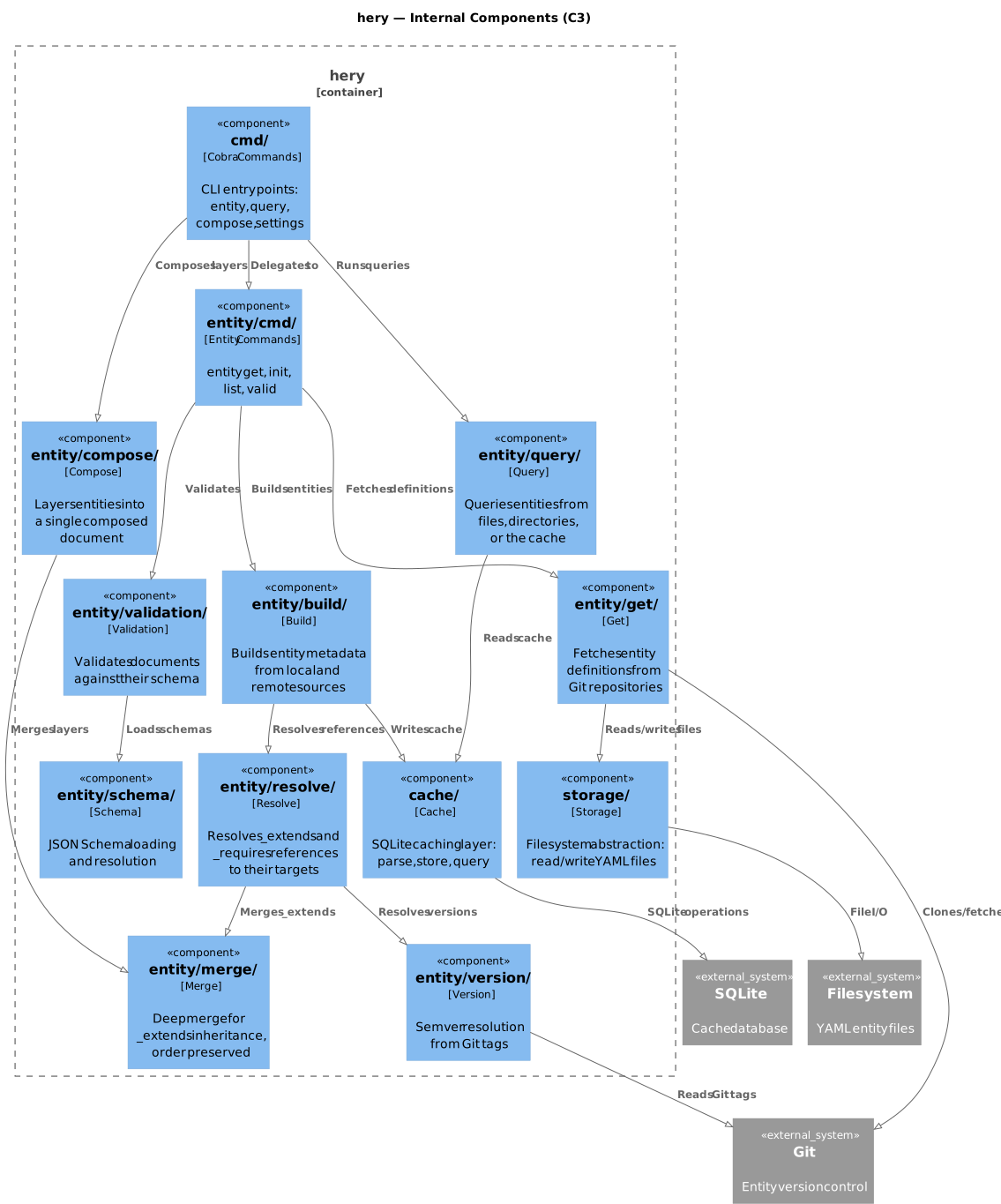
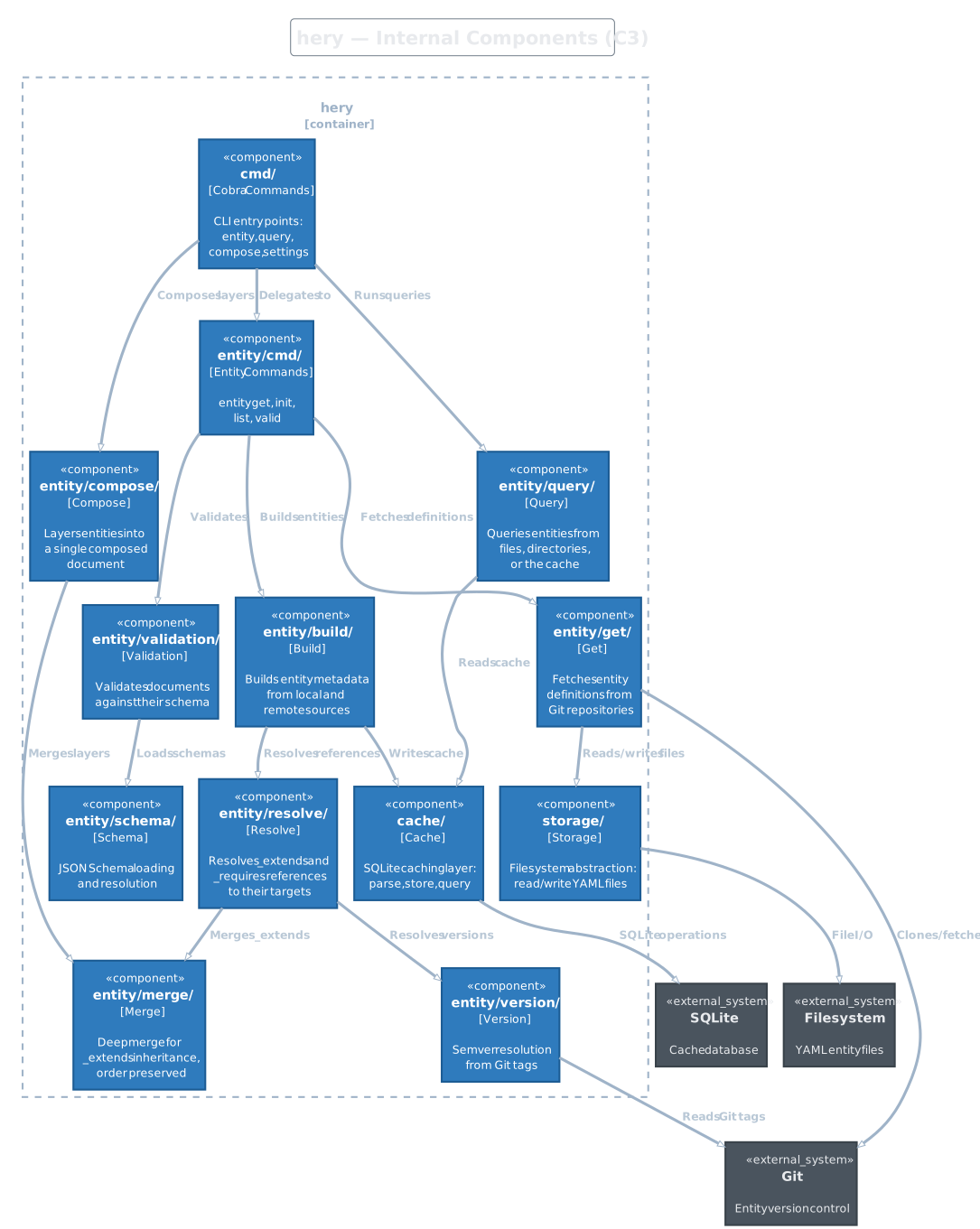
Package Structure
cmd/                    # Cobra CLI commands
├── entity.go           # hery entity (get, list, valid)
├── query.go            # hery query
├── compose.go          # hery compose
└── settings.go         # hery settings

entity/                 # Core entity logic
├── build/              # Entity building from YAML
├── cmd/                # Entity subcommand implementations
├── compose/            # Multi-entity composition
├── get/                # Entity retrieval
├── merge/              # Deep merge engine
├── query/              # Query engine (selection flags + gojq)
├── schema/             # JSON Schema handling
├── validation/         # Entity validation against schema
└── version/            # Semver version resolution

cache/                  # SQLite caching layer
├── database/           # SQLite operations
└── parser/             # Cache parsing
storage/                # Filesystem abstraction
message/                # Error types
Key Design Decisions
- Dual storage: YAML files (source of truth) + SQLite (fast queries)
- Git-based versioning: Entity URIs include version tags resolved from Git
- JSON Schema validation: Every entity type has a schema; validation is enforced
- Deep merge: Objects merge recursively, arrays replace, scalars use child value
- URI resolution: Go-module-style resolution for
_typeand_extendsURIs - Two-stage query: Selection flags (SQLite-indexed) + jq transformation (gojq compiled in)
- Comment-aware YAML: Uses goccy/go-yaml to preserve
$schemacomments - Interface-based design:
Entity,Storage,Cache— all mockable (idiomatic Go naming, no I/S prefix) - BDD testing: Uses Ginkgo v2 + Gomega (unlike most Amadla projects which use testify)
Current Gaps
- Add
_requiresas 5th reserved property (Draft 3.5) _requiressyntax validation at parse time (URI format,../escape prevention)- Cache rebuild from source YAML may have edge cases
- URI resolution (Go-module-style, meta tag discovery) not yet implemented
- Documentation within the project is sparse
Key Files
| Path | Purpose |
|---|---|
cmd/entity.go |
Entity command registration and flag setup |
cmd/query.go |
Query command entry point |
entity/entity.go |
Core Entity interface and implementation |
entity/merge/ |
Deep merge engine |
entity/query/ |
Two-stage query (selection + gojq) |
cache/database/ |
SQLite schema and operations |
entity/schema/ |
JSON Schema loading and validation |
entity/version/ |
Semver resolution from Git tags |
.mockery.yaml |
Mock generation configuration |
.schema/ |
Internal schema definitions |
resources/sql/ |
SQL resource files |